Categories
Blog Insights

Closing the Data Gap: How Cross-Agency Platforms Play an Essential Role for Rural Health Transformation

Closing the Data Gap: How Cross-Agency Platforms Play an Essential Role for Rural Health Transformation

Byline: Mehul Shah

When we talk about transforming rural health, discussion often jumps to policy: how to address funding levels, workforce shortages, or medication availability in healthcare deserts. But policy talk in the absence of comprehensive data falls short. After 35 years working with clinical research data and federal health agencies, CTIS brings a perspective on the data bottleneck—and opportunity—for transforming rural health through data-driven policy: Implementation of cross-agency data sharing platforms that ensure comprehensive, secure data transparency across federal, state, local, and tribal levels. This innovation is crucial to understanding the real, geography-specific challenges of rural healthcare and moving past claims-only data that hide the unmet healthcare needs of many rural Americans.

Initiatives like the Rural Health Transformation (RHT) Program—administered by the Centers for Medicare and Medicaid Services (CMS) and implemented by states—are crucial to addressing rural-urban health disparities. With goals to expand care access, strengthen the rural health workforce, and modernize technology and care models, RHT-funded states can make a real impact on rural health outcomes. But to succeed, programs like RHT will need a higher-fidelity, cross-agency data picture—one that securely integrates research data from the National Institutes of Health (NIH), pharmacovigilance and safety data from the Food and Drug Administration (FDA), CMS’s claims and payment data, and relevant local datasets.

Moving beyond claims-only data to address rural health challenges
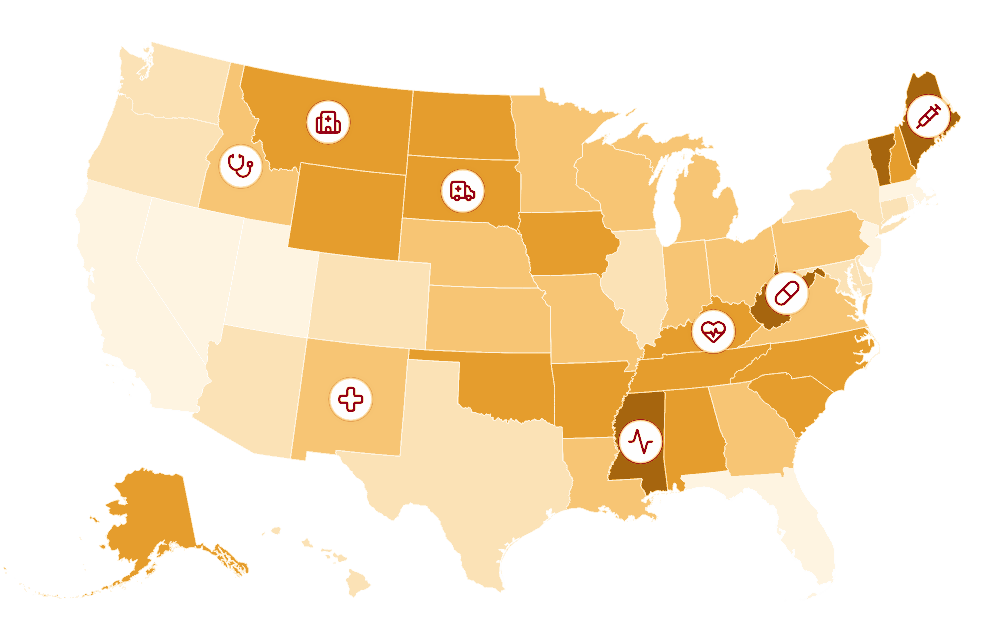
CTIS rural health map

Today, CMS relies heavily on claims data to understand what is happening in rural communities, despite recent efforts to address data gaps on urban-rural health disparities. But claims data obscures the full picture. It tells you what healthcare services were used, how much they cost, and how they were billed, but it doesn’t tell you much about local medication or provider shortages, how disease prevalence is evolving in specific areas, the drugs most often prescribed to treat them, and the safety profiles for those treatments. This mismatch between the complexity of the problems and the simplicity of the data used to solve them is a risky blind spot.

A true cross-agency data collaboration platform raises the fidelity of the picture. It gives CMS and states a clearer view of the challenges so they can make the right decisions on workforce, access, technology, and innovative care. At CTIS, our decades of experience with the National Institutes of Health (NIH) and with clinical trials has reinforced the best practices of ensuring multiple datasets inform decision making. For decades, clinical trials have combined study data, safety data, outcomes data, and real-world follow-up. The level of fidelity we routinely demand in clinical research is one that shapes CTIS’s approach to cross-platform data sharing to support Health IT initiatives.
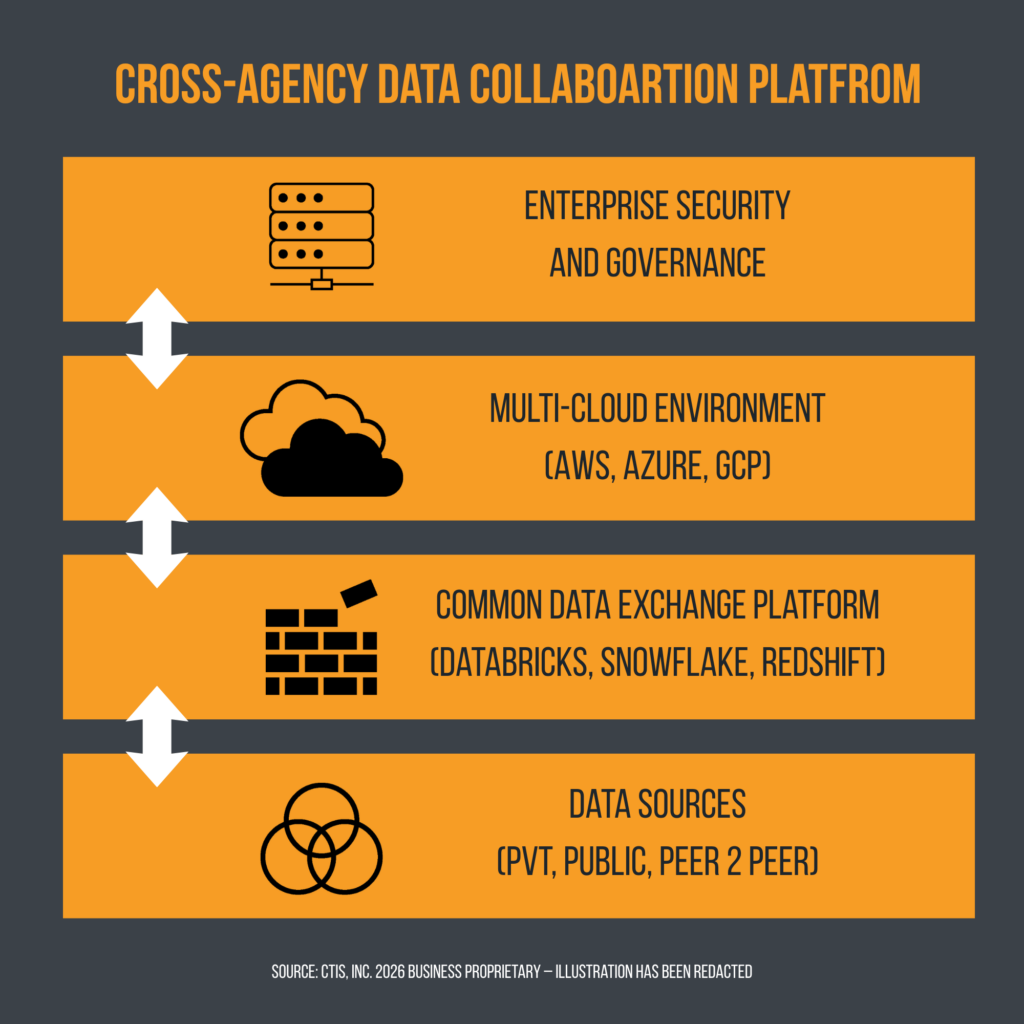
CTIS rural health data collab model table

Key Considerations for Cross-Agency Health Data Sharing Platforms

  • Data Sharing & Governance: Enable secure, streamlined data sharing across agencies, organizations, and systems, with appropriate governance and oversight.
  • Interoperability & Integration: Support integration across existing data sources, analytics tools, applications, and industry standards.
  • Cloud & Technology Infrastructure: Provide scalable, flexible infrastructure across cloud, mobile, web, and database environments.
  • Security & Compliance: Incorporate security, privacy, monitoring, and compliance requirements throughout the data-sharing environment.
  • AI & Advanced Analytics: Enable the use of AI, machine learning, analytics, and dashboards to support better decision-making for patients, providers, and administrators.

Leveraging cross-agency data to drive better reimbursement policies

Better data access can address one of the biggest and most expensive pain points for rural health providers: reimbursements. Earlier in my career I worked as a medical representative and saw firsthand how differently decisions about drugs and policy played out in urban practices where large practices and hospitals were less dependent on claims being paid quickly. In rural settings, however, providers work with narrow margins and smaller populations, so slow or partial reimbursement can increase burden on these providers and their patients.

With integrated cross-agency data, CMS can make more informed reimbursement policies for rural providers that consider economic burden, actual local costs versus reimbursement rates, and the true impact of specific diseases on rural populations. This may lead to faster reimbursements and incentives for rural health providers. Importantly, the agency can also leverage cross-agency data to improve drug reimbursement policies and pricing. For example, NIH clinical research data can help CMS negotiate pricing based on actual drug performance in specific geographies; incorporating real-world evidence (RWE) may give the agency leverage to drive down drug prices.

Making cross-agency data sharing work: agreements, governance, and compliance

The technology that drives cross-agency data sharing is just one piece of making this work. Equally important are data use agreements and the governance around them. These must be in place in order to integrate datasets across agencies and clinics. Existing data use and sharing agreements across agencies are often narrowly scoped to single studies, rather than allowing for ongoing, multi-organization collaboration. So, establishing rules for data sharing across multiple stakeholders for the RHT Program will need to be addressed first.
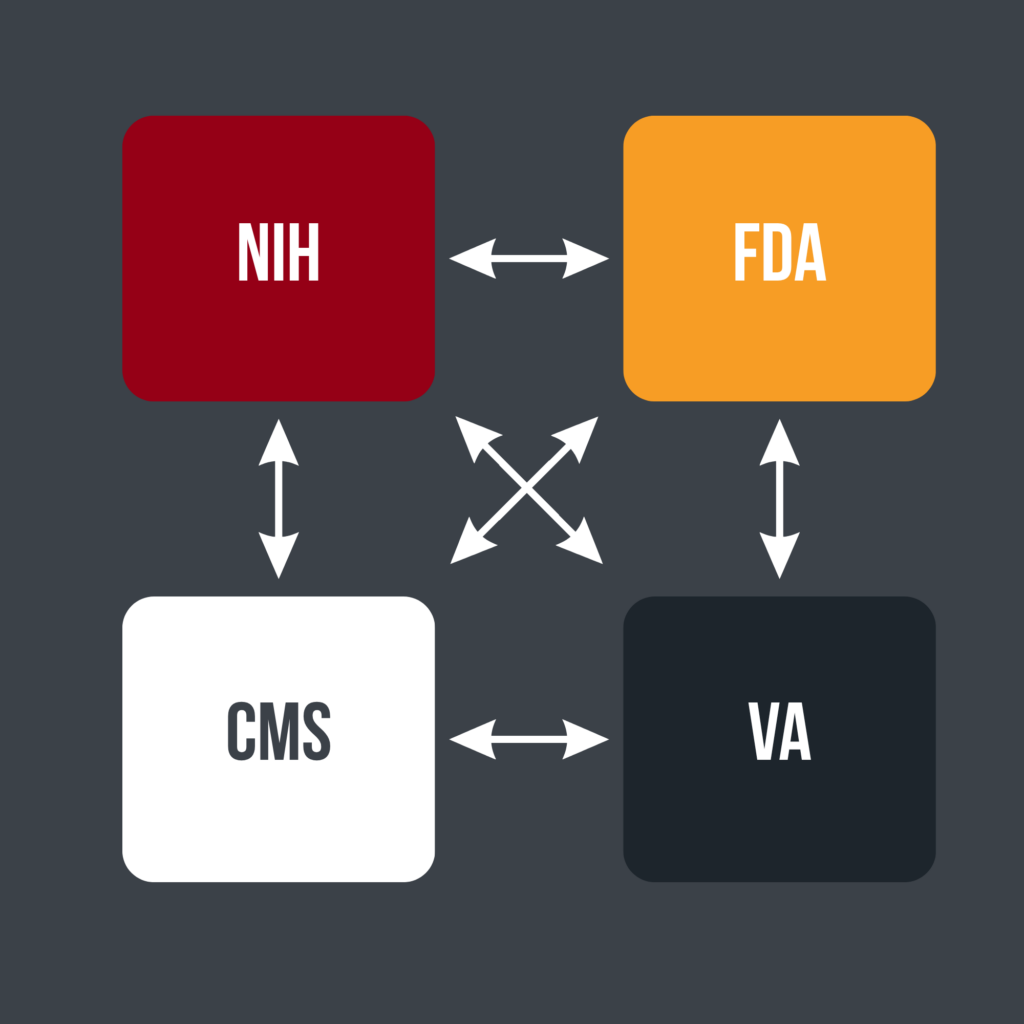
CTIS interagency data sharing

With data sharing agreements in place, a robust cross-agency platform can become an important tool for streamlining compliance and governance of data sharing across the program. Specifically, it can help to automate the onboarding of new datasets and track, monitor, and report data sharing to ensure compliance with in-place agreements. This governance layer should also support interoperability standards like Health Level 7 (HL7) Fast Healthcare Interoperability Resources (FHIR) and common data models including the Observational Medical Outcomes Partnership (OMOP), helping to enforce consistent rules across agencies and programs.

Extending impact: mobile apps, AI, and real-world workflows

Even the most sophisticated cross-agency data sharing platform won’t fix every healthcare access challenge in rural America. Connectivity gaps and outdated infrastructure are real constraints that other industry partners will be best positioned to address. But robust health IT platforms can extend the reach of cross-agency data into everyday rural workflows that have a meaningful impact. At CTIS, we see a role for mobile apps with an AI/ML layer to support training, education, and outreach for patients, providers, and nurses; to monitor rural health; and to integrate back into electronic health records (EHRs) using gamification, tailored education, and performance tracking.

Making an impact on rural health outcomes

The RHT Program offers a chance to make a real impact on rural health outcomes, but the work it funds depends on the right data foundation: moving beyond a claims-only lens to a high-fidelity, cross-agency view of rural health; using that view to design smarter, less burdensome reimbursement and drug policies; leveraging better data access and AI/ML-powered tools to assist providers and empower patients; and putting in place the data sharing agreements, governance, and compliance tools that make sustained cross-agency collaboration possible.

Learn more about CTIS’s health IT capabilities.

Categories
Insights News

CTIS Earns 2026 WTOP News Top Workplace Award for Federal Health IT

CTIS Earns 2026 WTOP News Top Workplace Award for Federal Health IT

June 24, 2026

CTIS, Inc., a Women-Owned Small Business (WOSB) headquartered in Rockville, Maryland, today announced its selection as a 2026 WTOP News Top Workplace. The designation is based entirely on confidential results from the independent Energage Workplace Survey, a research-backed assessment of employee engagement, leadership quality, and organizational culture. The recognition reflects the workforce stability and employee engagement that have sustained CTIS’s federal health IT delivery at the National Institutes of Health (NIH) for nearly four decades.

“This recognition carries weight because it comes from the people who do the work, our clinical informaticists, data engineers, and health IT specialists who support NIH programs every day,” said Bharti Shah, CEO of CTIS, Inc. “When employees stay, they build the kind of institutional knowledge and domain depth that you cannot replicate through hiring alone. That continuity is what allows us to deliver consistently across contract cycles, and it is why we are investing in AI-native training and professional development, so our teams are equipped for the next generation of federal health challenges, not just today’s.”

CTIS has maintained a 93.7% employee retention rate across its active federal health IT programs. On its longest-running engagement, NCI’s Cancer Therapy Evaluation Program Enterprise System (CTEP-ESYS), a clinical research informatics platform CTIS originally developed in 1996, more than 30 team members have served continuously for over a decade.

The company delivers through GSA MAS, CIO-SP3 Small Business, and SPARC-SB contract vehicles, providing federal agencies with established procurement pathways for health IT modernization and AI-enabled clinical research solutions. CTIS recently earned the SAFe AI-Native Charter Partner designation, reflecting its investment in equipping delivery teams with the frameworks and skills required for responsible AI adoption in regulated federal health environments.

The Energage Workplace Survey, which administered the assessment underlying the WTOP Top Workplaces program, measures the key drivers of employee engagement and organizational health, including how employees experience leadership, support, growth opportunities, and their connection to the organization’s mission. For more information on the survey methodology, visit energage.com or topworkplaces.com.

Categories
Blog Insights

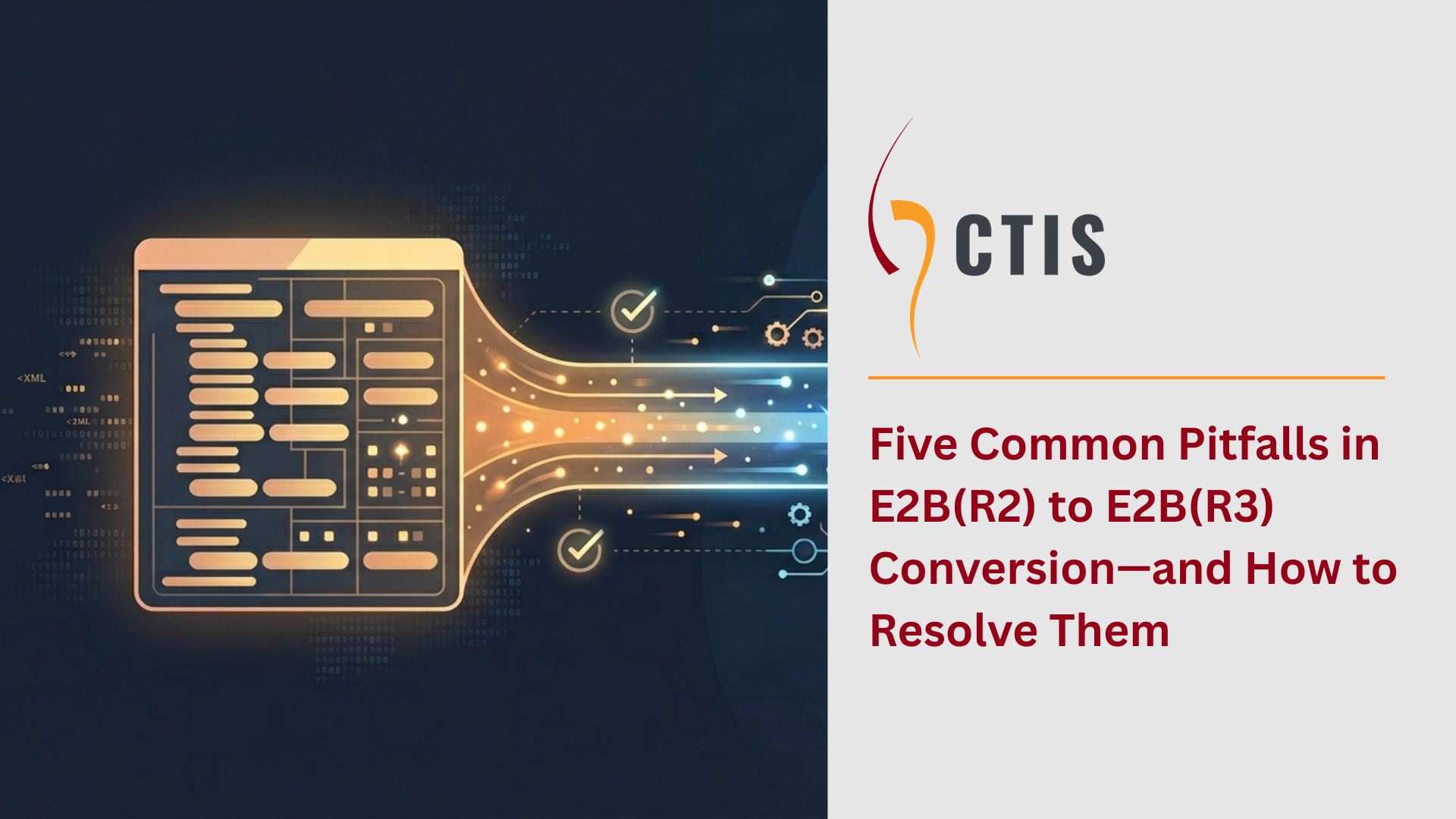
Five Common Pitfalls in E2B(R2) to E2B(R3) Conversion—and How to Resolve Them

Five Common Pitfalls in E2B(R2) to E2B(R3) Conversion—and How to Resolve Them

June 10, 2026

Key Takeaways

This article addresses five critical pitfalls often faced in converting E2B(R2) data to the E2B(R3) format for individual case safety reports (ICSRs): underestimating the data model complexity, incomplete field mapping, persistent validation failures, schema-level errors, and scarce pharmacovigilance expertise. These challenges can create costly submission delays and compliance risks, particularly for smaller companies and contract research organizations (CROs). Automated, purpose-built conversion platforms can help address these obstacles. Organizations selecting a platform to ease conversion processes should prioritize key features including intelligent mapping, multi-layer validation, and expert support—helping them achieve full E2B(R3) compliance quickly and cost-effectively.

Global pharmacovigilance is shifting as health authorities, including the FDA and other regulators, mandate ICSR submission using the E2B(R3) data format for expedited and periodic safety reporting.

For sponsors, CROs, and safety service providers, this transition represents a fundamental re-engineering of how safety data is structured, validated, and transmitted. To ensure compliance, companies must not only understand the new ICH E2B(R3) guideline and regional implementation standards, but reliably generate submission-ready E2B(R3) messages from existing E2B(R2) data. This requires consistent handling of data mapping, enrichment, validation, and routing—tasks that can place a burden on companies without deep in-house E2B(R3) expertise or budgets to develop custom solutions. 

Pitfalls are common and can be costly—and knowing what types of tools and solutions can help avoid them is crucial to meeting the FDA’s upcoming E2B(R3) compliance deadline.

Pitfall 1: Underestimating data model complexity

E2B(R3) is not a simple update. It requires re-architecting the entire safety data model, including new fields, restructured data, and more rigid relationships between elements. This can make manual or semi-automated data mapping projects brittle, expensive, and prone to error.

The Trial SafetyXchange Advantage

Our platform encapsulates the complete R2-to-R3 mapping logic in a managed, configurable service. We handle the intricate re-structuring automatically, eliminating the need for you to develop and maintain complex custom transformation code.

Pitfall 2: Incomplete or incorrect data mapping

Teams tasked with data conversion may erroneously assume a one-to-one correspondence between R2 and R3 data fields. They are in fact significantly different. R3 often requires new information, derived values, or enrichment of existing data to be compliant. Inconsistent mapping across teams or systems leads to poor data quality and submission failures.

The Trial SafetyXchange Advantage

The platform includes centralized, intelligent mapping rules that consistently apply enrichments and defaulting logic. For example, if an R2 message contains a free-text “Route of Administration,” Trial SafetyXchange maps it to the correct R3 codified field, ensuring uniformity and compliance where a manual process might fail.

Pitfall 3: Persistent validation failures and rejections

Regulatory gateways enforce strict validation rules. Generating a file that passes all checks on the first attempt is difficult; highly technical errors for invalid date formats, character length violations, and other rejections are common, leading to rework and potential compliance delays. 

The Trial SafetyXchange Advantage

Integrated, multi-layer validation proactively catches hundreds of specific technical errors before a file is finalized. The system automatically triggers XSD validations to check for and flag any issues with date formatting, code and value lists, and field length and content violations. 

Pitfall 4: Schema-level failures

A frequently overlooked pitfall in E2B(R2) to R3 conversion is the high incidence of schema (XSD) validation failures that prevent downstream business rule checks from executing. This creates the risk of a false sense of assurance where only surface‑level schema errors are corrected, while other validation issues persist and lead to unresolved regulatory and compliance problems. As a result, teams enter repeated correction cycles without ever reaching a truly submission-ready state.

The Trial SafetyXchange Advantage

By enforcing a schema‑first validation, Trial SafetyXchange ensures structural correctness before applying business rules. It clearly distinguishes between XSD errors and business rule violations, reducing ambiguity and misinterpretation, while providing guided remediation that prioritizes fixes in the proper order. An integrated revalidation workflow then confirms steady progress from basic schema compliance to full regulatory validation.

Pitfall 5: Dependence on scarce pharmacovigilance expertise

A successful E2B(R3) transition has traditionally required a team of specialists who understand the data model, XML standards, and evolving regulatory guidance. These experts are rare, expensive, and difficult to retain.

The Trial SafetyXchange Advantage

Pharmacovigilance expertise is embedded directly into the logic of Trial SafetyXchange, and is augmented by a dedicated team of expert support staff. CTIS informatics specialists are available to help with complex issues or unusual cases flagged by the platform.

Compliance without complexity

As pharmacovigilance teams face complex pitfalls in the E2B(R3) transition process, Trial SafetyXchange offers a seamless solution for automated file conversion and validation alongside expert support—saving time and reducing operational burden.

Learn more about how Trial SafetyXchange can help your organization meet the FDA’s mandate quickly and affordably: www.trialsafetyxchange.com

Categories
Insights News

CTIS, Inc. Launches Trial SafetyXchange to Help Pharma Companies Meet Critical FDA E2B(R3) Compliance Deadline

CTIS, Inc. Launches Trial SafetyXchange to Help Pharma Companies Meet Critical FDA E2B(R3) Compliance Deadline

April 2, 2026

Affordable, cloud-based SaaS solution automates E2B (R2) to E2B (R3) conversion for small and mid-size pharma organizations.

ROCKVILLE, MD — CTIS, Inc., with more than 30 years of experience in Health IT and clinical research informatics expertise for government and industry clients, today announced the commercial availability of Trial SafetyXchange. The cloud-based software-as-a-service (SaaS) solution is purpose-built to help small and mid-size pharmaceutical companies, biotech firms, and contract research organizations (CROs) seamlessly convert Individual Case Safety Report (ICSR) files from the prior E2B (R2) format to the U.S. Food and Drug Administration (FDA)-mandated E2B (R3) standard ahead of the agency’s April 1, 2026 compliance deadline.

Trial SafetyXchange addresses a critical gap in the pharmacovigilance technology market. With the April deadline approaching, organizations that have not yet transitioned to E2B (R3) face potential regulatory consequences and penalties imposed by the FDA. For companies without an existing enterprise solution, Trial SafetyXchange offers a practical, immediately deployable path to compliance—at a fraction of the cost and human resource drain of traditional platforms.

“Creating E2B R3 outputs from the ground up is highly complex and requires specialized expertise—it’s not realistically achievable without the right technology, especially in light of the FDA’s E2B R3 mandate,” said Vaibhav Kothale, vice president and chief program and projects officer at CTIS. “With Trial SafetyXchange, we’re enabling companies to meet the FDA mandate without investing in expensive enterprise systems. Our solution removes barriers to compliance by simplifying the ICSR format conversion process and significantly reducing its associated costs.”

Trial SafetyXchange was designed with ease of use in mind. The solution accepts existing E2B (R2) files, automatically converts them to the R3 format, and runs them through a robust built-in validation engine—all through a 100% web-based interface that requires no downloads, no IT infrastructure, and no prior technical training. Organizations can be up and running quickly and submit reports with confidence, knowing their files comply with both the ICH E2B(R3) Implementation Guide and the FDA’s Regional Implementation Guide.

“For more than 30 years, CTIS has been committed to making Health IT solutions that are both powerful and accessible. With Trial SafetyXchange, we’re bringing the same depth of expertise we’ve built supporting the NIH and other federal agencies directly to small and emerging pharma companies that need it most,” said Bharti Shah, CEO and chairwoman of CTIS. “No organization should face a compliance deadline without a viable path forward simply because they lack the budget of a large enterprise. We’re proud to make Trial SafetyXchange available to the broader clinical research community.”

Trial SafetyXchange is available now. Organizations interested in learning more or scheduling a demo can visit www.trialsafetyxchange.com or contact the CTIS sales team at sales@trialsafetyxchange.com or 240-499-2200.

Take advantage of our Exclusive Launch Offer with complimentary access, available for a limited time.

###

About CTIS, Inc.
CTIS, Inc. is a Women-Owned Small Business (WOSB) headquartered in Rockville, Maryland, with more than 30 years of experience delivering Health IT solutions in support of clinical trials, hospitals, and research institutions. A trusted government contractor with a strong track record supporting federal agencies including the National Institutes of Health (NIH), CTIS specializes in clinical research informatics, safety reporting and monitoring, health data standards, and privacy and security solutions. The company is committed to creating secure, user-centered systems that reduce costs, accelerate drug development, and improve patient care. Learn more at www.ctisinc.com.

###

Press Contact
Mehul Shah
Modernization & Growth Director, CTIS, Inc.
Phone: 301-948-3033 x2143
Email: mhshah@ctisinc.com
Website: www.ctisinc.com | www.trialsafetyxchange.com

Categories
Insights News

CTIS Recognized on Orange Slices’ ‘Most Noticed in 2023’ WOSB List!

CTIS Recognized on Orange Slices 'Most Noticed in 2023' WOSB List!

Exciting News! Our work at CTIS has been recognized on a national stage! Orange Slices has featured an article on the “Most Noticed in 2023” WOSB list, and CTIS has made the cut! 
It’s a testament to the dedication and hard work of our incredible team. Thank you to everyone who’s been a part of this journey. We look forward to continuing our commitment to excellence and making a difference in the world of WOSB in the years to come.

Read the full article here https://lnkd.in/e3uuYrDX and let’s keep striving for greatness together!

CTIS WOSB Leadership Recognition TeamWork SuccessStory

Categories
Insights News

CTIS Leaders Quoted in The Daily Upside on AI Innovation

Categories
Insights News

Join Bharti Shah, Sudhir Raju, and Shannon Dillon at GOVTECH CONNECTS Ignite 2024

Categories
Insights News

Connect with Yogi Byreddy and Jay Mehta at Oracle Federal Forum 2024

Categories
Insights News

CTIS Hosts Fun-Filled Bring Your Child to Work Day with Team Building, Games, and Service Projects

CTIS Hosts Fun-Filled Bring Your Child to Work Day with Team Building, Games, and Service Projects

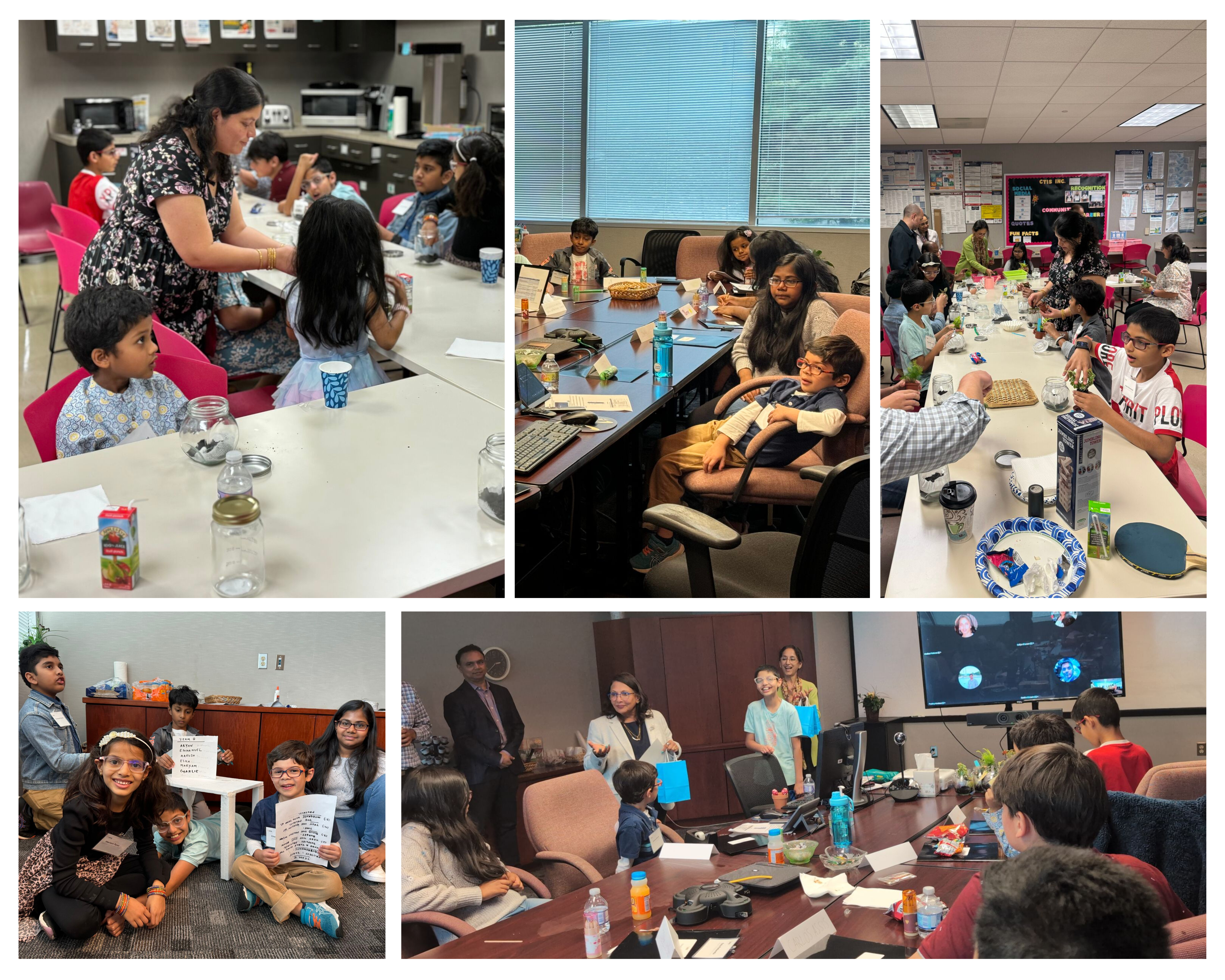
CTIS had a wonderful Bring Your Child to Work Day last month – and there were many great photos to share from the busy event. The kids got into team-building exercises by collaborating on a building project. There were many games: from Jenga and impromptu dancing, to ping pong with CEO Bharti Shah.

Later everyone had pizza and popsicles, assembled mini terrariums, and created cards for patients at The Children’s Inn at NIH. Our young visitors left us all smiling with pride after sharing a piece of the work and service we provide to medical researchers and healthcare practitioners. We can’t wait to do it again!

BringYourKidToWorkDay Gratitude TeamBuilding Culture Sharing

Categories
Insights News

CTIS Supports Children’s National Hospital at Guardian Society Luncheon

CTIS Supports Children's National Hospital at Guardian Society Luncheon

CTIS CEO Bharti Shah and @Carlos Rivera attended the Children’s National Hospital Foundation Guardian Society Luncheon in support of the hospital’s mission to provide quality healthcare for patients and families, improve health outcomes for children regionally, nationally, and internationally, and lead the creation of innovative solutions to pediatric health challenges. It was a wonderful opportunity to gather together in support of this shared mission and to meet the dedicated professionals from Children’s National including DeAnn Aston Marshall, MHA Tamara Sperling Beth Tutt, Art Therapist Jessica Thompkins Tracy Lee

Please join us in support of Children’s National Hospital https://lnkd.in/egtei9ub

PediatricHealthCare ChildrensNationalHospital GlobalHealth